🚦 Rules and regulations – theory test questions and answers – Page 3
901 official Israeli theory questions on Rules and regulations, with the correct answers. Read them all or practise them for free online.
Completely free. No sign-up, no payment.
- Which of the following vehicles is allowed to drive against traffic on a one-way road?✓ Only security vehicles
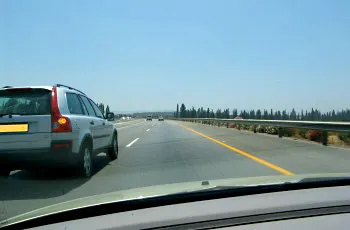 Under which conditions is it allowed to deviate from a driving lane?✓ Provided that no risk or disturbance is caused to any other road user.
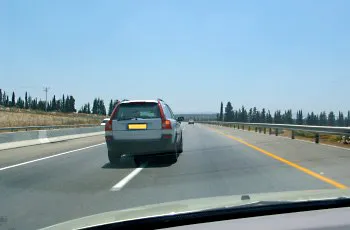 Under which conditions is a vehicle allowed to deviate from its line of driving?✓ Provided that no risk or disturbance is caused to any passerby.
- What is the correct manner of making a right-turn?✓ From the right lane to the right lane of the road you enter While driving in a reasonable speed and without causing any disturbance or danger
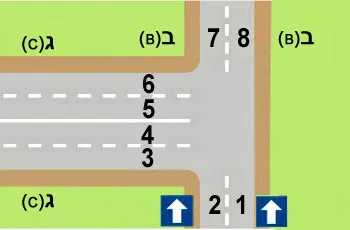 At the junction marked and signposted as in the diagram, what is the correct way to turn right from road B to C?✓ From lane 7 to 6.
- What should you check before beginning to make a right-turn?✓ That there is no vehicle driving on my right.
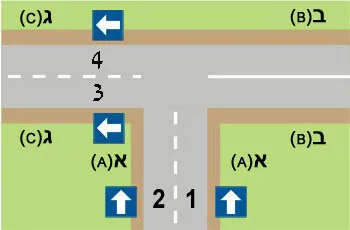 The following illustration shows an intersection with traffic signs. What is the correct manner of making a turn from street A to street C?✓ From lane 2 to lane 3.
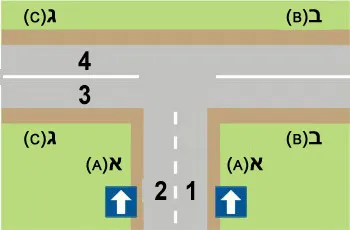 The following illustration shows an intersection with traffic signs. What is the correct manner of making a turn from street A to street C?✓ From lane 2 to lane 4
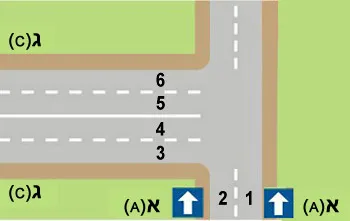 The following illustration shows an intersection with traffic signs. What is the correct manner of making a turn from street A to street C?✓ From lane 2 to lane 5.
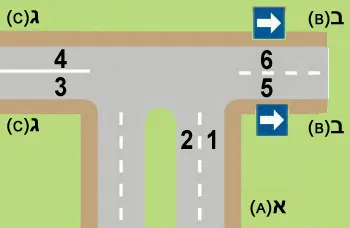 The following illustration shows an intersection with traffic signs. What is the correct manner of making a turn from street A to street C?✓ From lane 2 to lane 4.
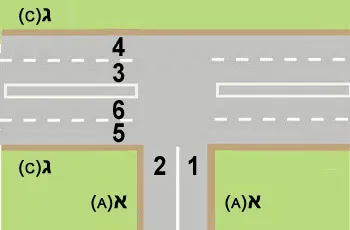 The following illustration shows an intersection with traffic signs. What is the correct manner of making a turn from street A to street C?✓ From lane 1 to lane 3.
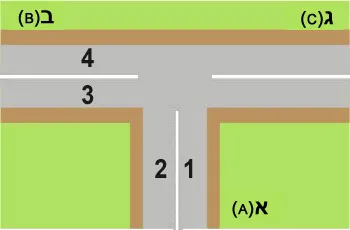 The following illustration shows an intersection with traffic signs. What is the correct manner of making a turn from street A to street B?✓ From lane 1 to lane 4.
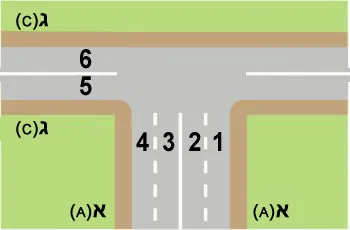 The following illustration shows an intersection with traffic signs. What is the correct manner of making a turn from street C to street A?✓ From lane 5 to lane 4.
- Under which conditions is it permitted to make a U-turn?✓ When no traffic disturbance is caused and no passerby is at risk, provided that there is no road sign that prohibits making a U-turn.
- It is prohibited to make a U-turn:✓ When the turn cannot be seen by a driver from any other direction.
- From which lane is it permitted to perform a U-turn to the left?✓ From a left-hand lane or from any other lane, provided that there is no road marking or road sign that prohibit turning from this lane.
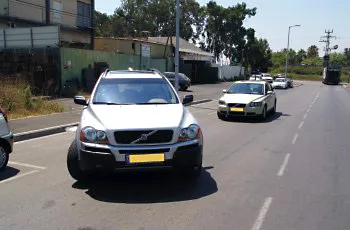 Under which conditions is it permitted to drive in reverse✓ Provided it is necessary and that no risk, interruption or disturbance is caused to any other road-user.
- How should drivers conduct themselves while driving opposite one another in a narrow and flat road?✓ Slow down and divert their vehicle to the roadway’s edge, , to avoid collision.
- How should vehicle drivers conduct themselves while driving on a road with a narrow and steep hill..✓ The driver of the descending vehicle shall, if required, stop his vehicle and make way for the ascending vehicle
- From which side are we permitted to overtake another vehicle?✓ Only from its left side.
- When is it permitted to overtake a vehicle on its right side?✓ When the other vehicle indicates and positions itself to turn left.
- Are you permitted to pass another vehicle on its right side?✓ Yes, when you drive in a bus lane.
- When another vehicle drives in the turning left only lane:✓ It is permitted to pass it on its rights side.
- The Points system of the Licensing Authority:✓ Is additional to any other punishment that is imposed by a court of law on a driver that committed a traffic offense
- When are you permitted to pass another vehicle on its right side?✓ When you are driving in a right-turn-only lane.
- When is it permitted to overtake another vehicle?✓ When the road is clear and you can overtake safely without causing danger to any other road user.
- When is it forbidden to overtake, or to try overtaking, another vehicle?✓ When visibility is poor or when the field of vision is obstructed or limited.
- Is it permitted to overtake, or to try overtaking, another vehicle within a distance of 100 meters before a railway crossing?✓ It is absolutely forbidden.
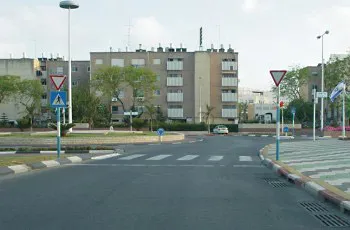 When you approach a pedestrian crossing:✓ Do not overtake and do not try to overtake any other vehicle before the crossing.
- When crossing an intersection with one lane in each driving direction:✓ It is prohibited to overtake and it is prohibited to try to overtake within the intersection’s boundaries, except if you are overtaking a two-wheeler.
- When are you forbidden to overtake another vehicle?✓ When the other vehicle stops before an intersection or before a pedestrian crossing or before a railway crossing.
- What should a driver of an overtaken vehicle do?✓ Deviate as much as possible to the road’s edge, without changing his speed.
- When is a driver required to drive on an asphalt paved hard shoulder?✓ When driving a motor vehicle that is forced to drive at a slow speed due to the cargo it is carrying or to the slope of the road.
- What gap should be maintained from the vehicle that is driving in front of us?✓ A gap which always allows us to stop and prevent a collision..
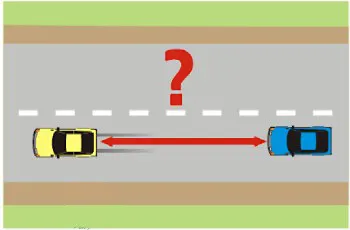 What is the minimal gap that you should legally maintain from the vehicle in front of you?✓ The distance traveled in one second of driving.
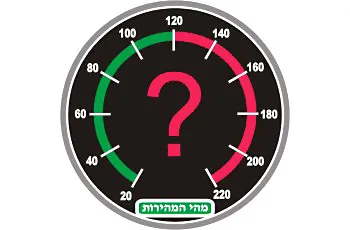 What is a reasonable vehicle speed?✓ A reasonable speed which, considering all the road conditions, and road signs allows the driver to control the vehicle
- In which cases are you legally obliged to slow down?✓ When the road is obstructed, or having poor visibility or sharp bends.
- In which cases are you obliged to slow down?✓ When encountering or overtaking an animal.
- Is it permitted to perform an emergency brake for any reason other than to prevent a road accident?✓ Yes, for brake-testing, provided that it does not disturb or endanger any other road user.
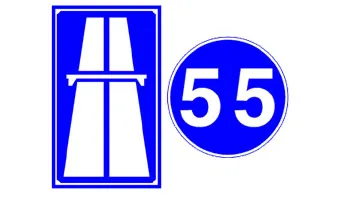 Which vehicles are permitted to enter a freeway?✓ A motor vehicle which is permitted and capable of driving at the speed that is indicated on the road sign.
 What is the maximum permitted speed for driving an all-terrain vehicle?✓ 40 KPH in any type of road.
- When is it lawfully required to perform a vehicle license test?✓ Every year or any other lawfully defined period.
 What is the maximum permitted speed for driving a private passenger vehicle on a freeway(motorway) (unless otherwise indicted)✓ 110 KPH.
 What is the maximum speed for a private passenger vehicle, driven on an inter–urban road with a central divider (if not indicated otherwise by a traffic sign)?✓ 90 KPH.
 What is the maximum permitted speed for driving a private passenger vehicle (if not indicated otherwise by a traffic sign)?✓ In an urban area – up to 50 KPH and on an inter-urban road – up to 80 KPH
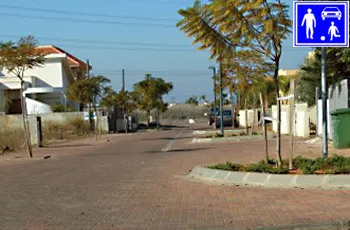 What is the maximum allowed speed in a “play street”?✓ 30 KPH.
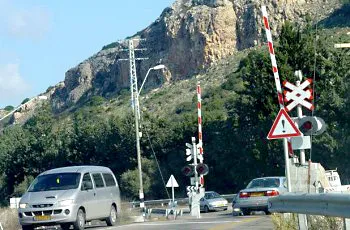 What must a driver do when approaching a railway crossing?✓ Slow down to a speed which will allow him to stop before the crossing.if necessary.
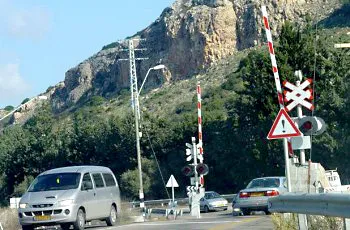 What must a driver do when approaching a railway crossing barrier which is marked by a traffic light?✓ He must always slow down.
- Where should you stop your vehicle when you are obliged to stop before a railway crossing?✓ Before the stop line. If there is no stop line – before the barrier.. If there is no barrier – at least four meters before the nearest rail.
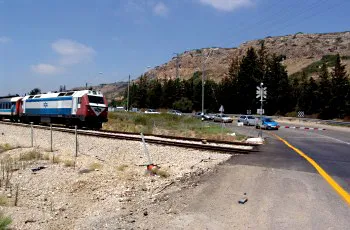 When you approach a railway crossing and an approaching train is seen, heard or sounds a warning signal:✓ You should stop before the railway crossing until the train passes.