🛡️ Safety – theory test questions and answers – Page 2
400 official Israeli theory questions on Safety, with the correct answers. Read them all or practise them for free online.
Completely free. No sign-up, no payment.
- How should one change lanes?✓ After checking and taking account of the position and speed of other vehicles in the intended lane.
- What is the order of actions to be taken in order to stop or park?✓ Check if it is permitted; make a peripheral check and slow down carefully.
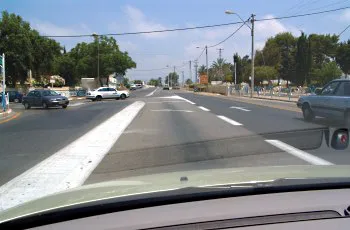 What is the main problem a driver faces when he approaches an intersection?✓ Many tasks he needs to perform simultaneously, in a short period of time.
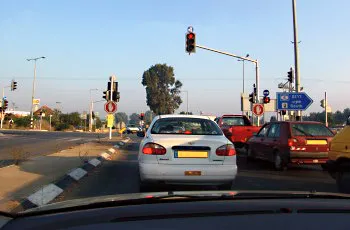 How can a driver handle the many tasks he needs to perform when approaching an intersection?✓ Slow down before the intersection, look around, and avoid engaging in any activity other than driving.
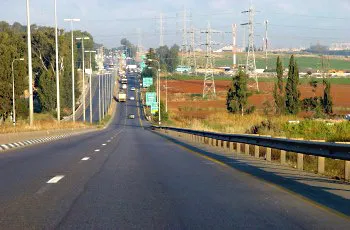 How does a multitude of traffic signs before an intersection affect the driver’s response?✓ The driver is forced to slow down in order to identify the signs and obey their demands.
- In order to overtake safely, the overtaking driver should:✓ Start overtaking only when the road is clear in a sufficient distance, and verify while overtaking that the road is still clear.
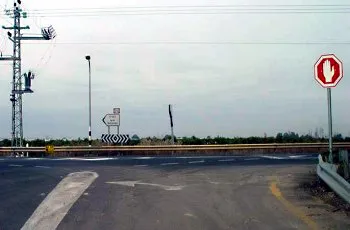 What is the main risk of approaching an intersection on a wet road?✓ The vehicle might skid into the area of the intersection due to the wet road.
- How does pedestrian behavior in the area of the intersection affect drivers?✓ Driver should anticipate in advance possible dangerous behavior from pedestrians in the area of the intersection.
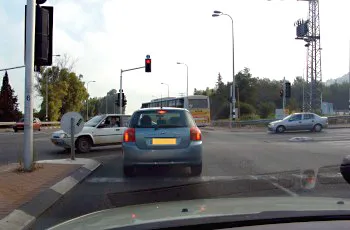 What are the specific risks and problems in crossing intersections?✓ Many and various contact points between the different types of vehicle through the intersection.
- Which of the following sentences is correct, as regards to the behavior of pedestrian near an intersection:✓ The safest place for pedestrians to cross is the pedestrian crossing next to the intersection, because drivers are obliged to slow down in the area of the intersection.
- What is the first action taken by drivers before crossing an intersection?✓ Making sure that the intersection is clear and that it can be crossed safely.
- What is the most important principle when turning right in an intersection?✓ To start and to complete the turn close to the right edge of the road.
- What risk is a driver facing while making a right turn?✓ Two-wheelers might enter the gap to his right during the turn.
- You arrived to an intersection that is not clear:(free)✓ Stop before the intersection and wait for traffic to clear.
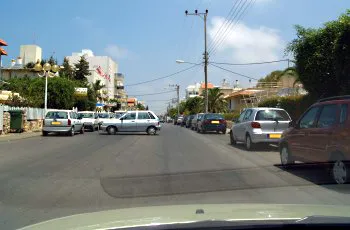 What are the risks in making a U-turn?✓ All the answers are correct.
- What should a driver always do before making left a U-turn?✓ Make sure that the turn is permitted and that it doesn’t cause any traffic disturbance.
- What is the main risk of driving in reverse?✓ The presence of road users in the driver’s “blind spots” and the chance of hitting them.
- What is a “blind spot”?✓ Part of the vehicle's circumference in which the driver cannot see or detect road users.
- What is the best way to reduce the dangers whilst driving in reverse?✓ By taking a proper and continuous all round view and by driving slowly.
- What are the risks of driving in high speeds?✓ Reduced ability of stopping the vehicle in time in order to prevent an accident, and even loss of control over the vehicle.
- What is the advantage of driving at a low speed during dangerous situations?✓ The drrivers quicker reaction, braking and stopping times are all shorter.
- What is the effect of driving at a high speed during an accident?✓ It causes greater force of collision and a more severe impact on humans and damage to property.
- What is the meaning of the term “driving at a reasonable speed”?✓ Taking account of road and traffic conditions, in a manner that the driver maintains absolute control of the vehicle and can stop safely at all times.
- What problem faces a vehicle driver who is driving at a high speed?✓ The driver has very little time to properly respond to road events.
- What is the relation between the vehicles speed and the vehicle’s stopping distance?✓ The higher the vehicle’s speed is, the longer is its stopping distance.
- What is a vehicle’s “stopping distance”?✓ The distance covered by the vehicle from the time that the driver identifies the risk ahead of him until the vehicle stops.
- What are the components of the stopping distance?✓ The sum of the reaction time and of the braking distance.
- The driver’s reaction distance is the distance covered by the vehicle:✓ From the moment the driver identifies the danger ahead until the moment he begins to react to the danger.
- The vehicle’s braking distance is the distance covered by the vehicle:✓ From the moment the driver steps on the brake pedal until the vehicle comes to a complete stop.
- Keeping a safe distance from the vehicle in front of us is required:✓ In order to prevent a rear-end collision when the vehicle in front stops or slows down.
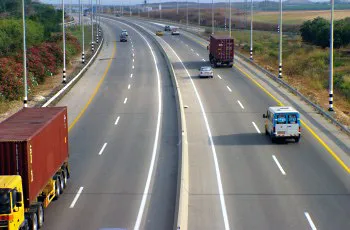 What is the distance we are required to keep from the vehicle in front of us while driving?✓ The required statutory distance in which accident may always be prevented, while taking all the relevant elements into consideration.
- What effect does keeping distance have on the driver’s field of vision?✓ The greater is the distance we keep from the vehicle in front, the better is our field of vision.
- What effect does driving whilst keeping proper distance from the vehicle in front has on the vehicle’s fuel consumption and wear?✓ When proper distance is kept – brake wear and engine fuel consumption are reduced,
- What characterizes a state of driving in which proper distance from the vehicle in front is kept?✓ Less stressed and relaxed driving, which doesn’t cause tiredness, and prevents risks.
- What is a driver always required to do when another vehicle “sits on his tail”?✓ Verify that the distance he keeps from the vehicle driving in front will allow him to brake moderately and avoid the risk of a collision from behind.
- What is the proven and recommended method for keeping proper distance from the vehicle driving in front of us?✓ The “two-second count” method.
- When are we required to keep a more-than-customary distance from the vehicle driving in front of us?✓ When visibility is poor, when driving on a slippery road or when we are tired.
- When is it permitted to pass more than one vehicle during one overtaking maneuver?✓ When overtaking is not restricted, and there is enough space in the overtaking lane for safe completion of the overtaking maneuver.
- It is prohibited to start overtaking without verifying✓ Is it permitted? Will I manage to complete it safely, without any doubt?.
- One of the conditions justifying an overtaking of a driving vehicle is:✓ That the difference in speed between the overtaking and the overtaken vehicles is sufficient to complete the manouver.
- Select the correct sentence:✓ By keeping proper distance, an overtaking vehicle can enter the space in front.
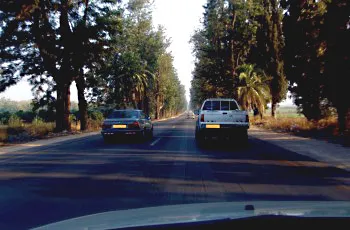 When you are overtaking another vehicle on a two-lane two-way roadway:✓ You take a risk of another vehicle appearing in the opposite lane.
- How would you get the attention of the overtaken vehicle’s driver while overtaking on a freeway (motorway)?✓ You are permitted, if it is necessary, to use the horn briefly before passing, .
- You are driving in a two-lane one-way street and try to overtake the vehicle driving in front of you. The main risk in deviating to the left is:✓ Disturbing a vehicle driving in the left lane.
- What are the actions you are required to take, before intentionally pulling onto the “hard shoulder” of a non-urban road?✓ Good observations mainly to the rear, signaling appropriately and slowing down.
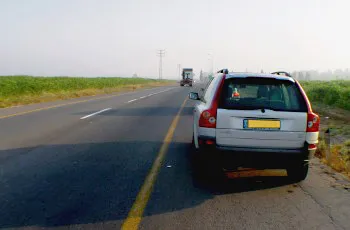 What are the most important conditions in order to safely pull onto the “hard shoulder”?✓ That the hard shoulder and the road are in the same height and that the hard shoulder is wide enough.
- What is the correct way for pulling onto a “hard shoulder” which is lower than the road?✓ Slowing down to a low speed and gradually moving onto the “hard shoulder”.
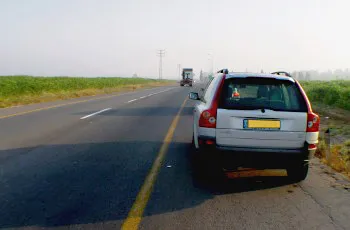 Where would you stand your vehicle after being required to pull onto the “hard shoulder”?✓ As far as possible from the edge of the road.
- What are the preliminary actions a driver must perform while getting back up to the road from the “hard shoulder”?✓ Observing all traffic on the road, signaling appropriately and gradually moving back on the road.
- What is the first stage in getting back on the road from the “hard shoulder”?✓ Signaling with the indicator.